
BLOC-GEOPOLITICS | 2 November 2026 | By Altesse Mulamba
The war against the M23 has mobilised the Congolese authorities and their international partners. Meanwhile, the Allied Democratic Forces (ADF) are exploiting gold to sustain their attacks. An investigation published on 27 October raises questions about Kinshasa’s security priorities and the effectiveness of joint military operations with Uganda.
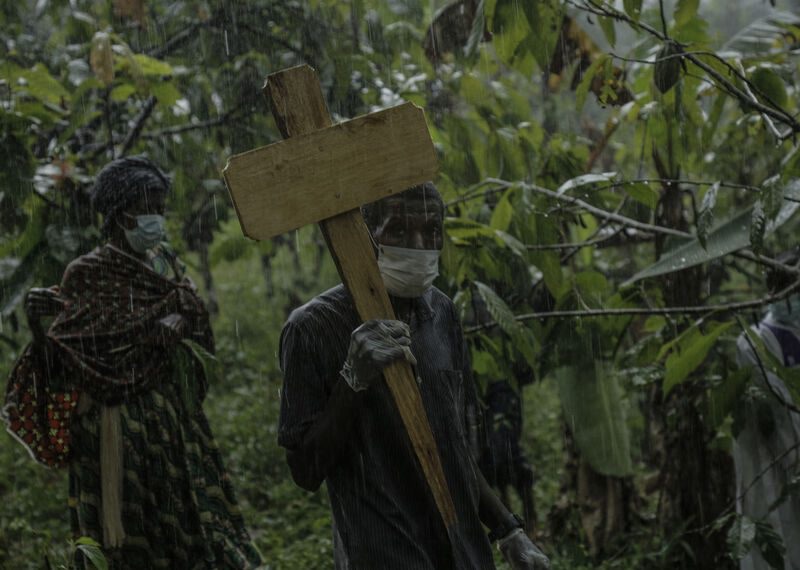
The Allied Democratic Forces, commonly known as the ADF, have become less dependent on external funding from the Islamic State group. Gold extraction and trading now finance a substantial proportion of their activities in eastern Democratic Republic of the Congo (DRC), according to an investigation published by The Sentry on 27 October. The organisation also concludes that the group has benefited from the concentration of Congolese military efforts on the M23.
The findings raise a question extending beyond the financing of an armed group. How can the authorities prevent the prioritisation of one conflict from creating opportunities for another group to strengthen its position? For communities exposed to ADF attacks, defending Congolese territory against the M23 cannot mean postponing their protection.
Warnings Were Already Documented
The ADF emerged from Ugandan opposition groups formed in the 1990s before establishing themselves in what is now the DRC. Affiliated with the Islamic State group, the movement has been responsible for attacks against civilians, abductions and forced recruitment.
In a report published on 5 May 2026, Amnesty International documented war crimes through 71 interviews, including 45 with victims and survivors. The organisation had already observed that the ADF had taken advantage of the Congolese army’s mobilisation against the M23.
That assessment is consistent with an analysis by the Armed Conflict Location & Event Data Project (ACLED) covering early 2025. ACLED described how the ADF exploited the disruption caused by the M23 offensive and the shifting priorities of the Congolese military to launch attacks against civilians.
It would therefore be inaccurate to describe the threat as unknown or entirely neglected. Investigations, warnings and military operations have all taken place. The question is why these efforts have failed to provide lasting security for the population.
Why the M23 Occupies a Distinct Position
The M23’s seizure of territory and major cities, together with Rwandan support documented by United Nations experts, gives the conflict an interstate dimension. Questions of sovereignty, military withdrawal and negotiations with Kigali explain its diplomatic significance.
That distinction must be recognised without establishing a hierarchy of victims. An attack on a village does not become secondary simply because it does not alter a front line or prompt an international meeting.
The available evidence does not allow a precise assessment of how much attention each conflict receives across the Congolese media or among the public. It does, however, support a more specific question about military priorities. When an army concentrates its resources on one adversary, how does it protect communities threatened on other fronts?
The risk goes beyond troop shortages. If armed groups can anticipate where military pressure will ease, they can adapt their movements and attacks to the state’s priorities. Difficulties confronting the M23 may therefore create opportunities for the ADF, without any alliance between the two movements.
Gold Sustains the Conflict
The Sentry estimates that gold-mining sites in the Manguredjipa area could generate between $1 million and $1.6 million annually for the ADF. This range is based on comparisons with revenues obtained by other armed groups. It does not represent audited accounts or the ADF’s total income.
The investigation describes networks connecting mining areas in the DRC to traders, intermediaries and markets in Uganda. It also reports the use of abductions to obtain labour and recruit fighters.
These findings change how military results should be assessed. Driving fighters out of a camp does not necessarily deprive them of their income. If they relocate to another mining area and retain access to buyers, they may be able to rebuild their resources.
Efforts to combat the ADF must therefore follow the gold beyond the extraction sites. Investigators need to establish who purchases it, how its origins are concealed and which routes are used to export it. An intermediary’s responsibility must be established through evidence, but an absence from the battlefield does not necessarily mean an absence of involvement in financing the conflict.
Uganda Must Also Be Held Accountable
Uganda has participated in joint military operations against the ADF since 2021. It would be inaccurate to suggest that the group faces no military response. Nevertheless, the persistence of attacks demands closer scrutiny of what these operations actually protect.
The Sentry argues that the offensives have dispersed ADF fighters into more remote, resource-rich areas without dismantling the group’s capabilities. The organisation also raises concerns about the overlap between Uganda’s military objectives and Kampala’s economic interests in eastern Congo. These are the investigation’s findings and require documented responses from the authorities concerned.
The movement of gold through Uganda does not, in itself, prove that the Ugandan government finances the ADF. It does, however, warrant scrutiny of the controls imposed on traders and exporters. A military partner should not be exempt from such examination simply because it is an ally.
The criteria used to measure success also deserve examination. Securing a border or a trade route does not necessarily mean protecting the villages into which fighters have retreated. Kinshasa must be able to account for these differences when assessing its cooperation with Kampala.
Protecting Civilians on Both Fronts
Congolese sovereignty is at stake in the confrontation with Rwanda. It is equally at stake in the state’s ability to protect the people of Beni, Lubero and Ituri from the ADF. These responsibilities are not mutually exclusive.
The latest investigation calls for answers about the resources allocated to this front, the results of joint operations and prosecutions targeting financial networks. It also challenges news organisations to continue reporting on the aftermath of massacres beyond the initial death toll, when displacement, searches for missing people and difficulties returning home become the central concerns.
Communities threatened by the ADF should not have to wait for the conflict with the M23 to be resolved before receiving protection. Their security must be treated as a priority in its own right, backed by resources, sustained oversight and authorities accountable for the results.
“Bloc-Géopolitique | Les dynamiques du monde : puissance, souveraineté, dignité, rapports de force”
Restez connectés sur : X : @BlocNotesNews | @altessemulamba | IG : @leblocnotesnews | @altesse_mulamba_officiel |Facebook : @LeBloc-NotesNews | @Altesse Mulamba |TikTok : @leblocnotesnews | @altessemulamba |Écrivez-nous : leblocnotesnews@gmail.com

